- Our Location 18920 Statesville Rd. Cornelius, NC
- Hours M-F 7a-7p, Sat 8a-5p, Sun 9a, 12p, OR 5p
- Phone Call/Text (704) 896-6770
Stress-free dog boarding requires both sides to work: an owner's peace of mind means nothing if the dog is anxious or bored, and a dog's wellness doesn't matter much if the owner is checking their phone every five minutes.
At Paws Life, owner Kayla Shaw has over 25 years managing social playgroups and boarding stays, and we treat owner peace of mind and pet wellness as equally important goals.
Every facility claims to be clean, caring, and professional. The real differences show up in operating details: sanitizing frequency, staff training, emergency protocols, and what you can verify before you book. Evaluate on two parallel tracks, your dog's daily experience and your peace of mind.
Score each item 1-5. A facility that scores high on dog-experience but low on owner-transparency (or vice versa) tells you where the risk sits.
Track 1: The dog's day-to-day experience
Track 2: The owner's peace of mind
Bring this list and take notes. The quality of the answers matters as much as the answers themselves.
Pro Tip Do not rely on a single visit. Ask whether you can do a short trial stay or a daycare day before a longer boarding reservation. A trial day shows you how your dog actually behaves in the facility and gives staff real information to build a care plan.
If choosing between two facilities, weigh the tracks against your dog's needs. A high-energy, social dog benefits most from strong enrichment and matched playgroups; a senior, anxious, or medically fragile dog benefits most from individualized care and quiet rest.
[Image: Pet owner and staff member using a checklist to tour a clean facility for stress-free dog boarding.]
Before you commit to any facility, you need answers to specific questions. These aren't just nice-to-know details.
Ask about the staff-to-dog ratio. It directly impacts individual attention and play supervision; too many dogs per staff member means no personalized care.
Ask about communication: will they send updates, how often, what's included, and do they offer webcams or just daily photos?
A clean, healthy, entertained stay is not a vibe, it's a set of repeatable practices you can ask about and often see for yourself.
A truly clean boarding facility is designed to prevent disease, not just tidied between guests. Ask how each of these is handled:
Watch Out A facility that cannot describe its cleaning schedule, isolation protocol, and veterinary contact in specific terms is a facility where you are trusting luck rather than systems.
Dogs thrive on predictability. A clear daily rhythm, meals, play, rest, bathroom breaks, reduces anxiety and makes behavior easier to read. A credible schedule looks like this:
|
Time block |
Activity |
Why it matters |
|---|---|---|
|
Early morning |
Potty break, breakfast, medication if needed |
Restores routine and lets staff note appetite |
|
Morning |
Supervised playgroup or one-on-one enrichment |
Burns energy while energy is high |
|
Midday |
Rest period in the sleeping area |
Prevents overtired, cranky behavior |
|
Afternoon |
Enrichment: puzzle toys, sniffing games, quiet play, or a second play block |
Mental stimulation for dogs that need less physical play |
|
Late afternoon |
Potty break and light activity |
Breaks up the day before evening |
|
Evening |
Dinner, calm time, final potty break |
Winds down before sleep |
|
Overnight |
Supervised rest with periodic checks |
Safety and comfort through the night |
Ask for the facility's actual schedule and confirm rest is enforced, not optional. A dog entertained all day without rest risks overstimulation, which can look like stress rather than fun.
A one-size-fits-all program is the most common weak point in boarding. Ask how the facility adapts for:
Cleanliness and enrichment are hard to verify from home, which is why updates matter. A useful update includes a photo, a short behavior note (appetite, play, rest, bathroom), and any concerns. Live webcams give the strongest transparency, but even daily photo-and-note updates let you track patterns. If updates stop or become generic, call and ask specific questions.
Key Takeaway The test of a clean, healthy, entertained stay is whether the facility can describe its cleaning schedule, show you a daily routine, explain how it adapts care for individual dogs, and keep you informed while you are away. If all four are clear, both you and your dog are in good hands.
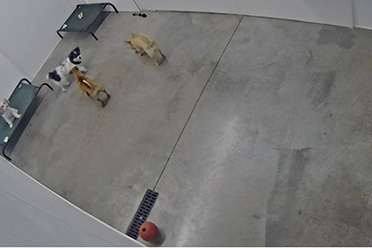
Webcam access has become a major factor in owner peace of mind, transforming the experience from faith-based to actually knowing what's happening.
The key is understanding what you're seeing.
A good webcam system shows the play areas and common spaces where dogs spend most of their day, so you can see your dog playing, resting, and interacting with staff and other dogs.
Be realistic about what you'll see. A napping dog is normal and healthy, dogs need rest. A dog playing with others is a good sign of socialization and comfort.
Most dogs can handle boarding stays of a week or longer, but the first few days are critical.
The best facilities don't expect every dog to be happy on day one. They have protocols for anxious dogs, extra staff attention, quieter environments, or gradual introduction to group play.
For longer stays, consistency matters even more. A dog boarding for two weeks needs familiar routines, regular contact with the same staff when possible, and engaging activities.
The preparation you do before boarding directly impacts how your dog experiences their stay.
Start by making your dog comfortable with the facility before the actual stay.
Document your dog's routine: meal times, portion sizes, dietary restrictions, and preferred activities.
Bring comfort items if the facility allows them.
Consider your dog's exercise level before boarding.
Be honest about medical or behavioral concerns.
At Paws Life, we've built our approach around this balance. Suite-style boarding with elevated beds ensures comfort and cleanliness, social playgroups and enrichment keep dogs mentally and physically stimulated, free HD webcams give you real-time visibility, and over 25 years of experience means we tailor care to each dog's personality and needs.
The right facility makes boarding a positive experience for everyone involved.
Evaluate facilities on cleanliness, staff experience, individual care practices, and how they handle your dog's specific needs. Ask about their daily routines, how they manage separation anxiety, vaccination requirements, and whether they offer transparent communication through updates or webcams. Visit in person to assess the environment and meet the team. A good boarding facility balances owner peace of mind with genuine attention to each dog's personality and routine.
Request a tour and observe the play areas, sleeping quarters, and food preparation zones. Ask about their cleaning protocols, how often areas are sanitized, and what health records they require. Facilities should have clear vaccination policies, first-aid supplies visible, and staff trained in pet safety. Ask how they handle medical emergencies and whether they have backup protocols. A reputable boarding facility will welcome your questions and show you exactly how they maintain a healthy environment.
Most dogs can stay 5–14 days comfortably, though this depends on age, temperament, and prior boarding experience. Senior dogs or those with anxiety may do better with shorter stays. Longer stays require a facility that understands your dog's personality and can provide consistent routines, regular exercise, and mental enrichment. Discuss your dog's individual needs with the facility before booking. Some dogs thrive on extended stays once they adjust; others need frequent breaks to decompress at home.
Many modern boarding facilities now offer HD webcams so owners can check in on their dogs throughout the day. This transparency helps reduce owner anxiety and allows you to see your dog's daily routine, playtime, and rest periods. When evaluating webcam systems, ask whether they're live feeds or recorded clips, what hours they're available, and how footage is secured. Real-time webcams give owners confidence that their dog is clean, entertained, and well-supervised while they're away.

20
Nov
Stress-free dog boarding balances owner peace of mind with pet wellness. Learn what to expect, how t...
Read More
19
Nov
Prepare your dog for a safe, stress-free grooming appointment. Learn what to ask groomers, when to s...
Read More
18
Nov
Learn how to find reliable animal boarding near you. Compare options, prepare your pet, and choose s...
Read More© Paws Life All rights reserved | Mobile-ready websites by Web Station Inc.