- Our Location 18920 Statesville Rd. Cornelius, NC
- Hours M-F 7a-7p, Sat 8a-5p, Sun 9a, 12p, OR 5p
- Phone Call/Text (704) 896-6770
Quick Summary
When choosing a dog daycare, tour the facility and check for double-gated entries, non-slip flooring, separate areas for large and small dogs, and staff actively watching the dogs. Ask about staff-to-dog ratios, how dogs are screened and grouped, vaccination requirements, and the written emergency protocol. Book a half-day trial and watch how your dog behaves at pickup and over the next 24 hours.
The U.S. pet daycare market was estimated at USD 4,744.4 million in 2025 and projected to reach USD 5,114.5 million in 2026, according to Future Market Insights' pet daycare market analysis. That growth means more facilities opening, more choices, and more ways to get the decision wrong. Knowing what to look for in dog daycare is the difference between a dog that comes home tired and happy and one that comes home stressed, injured, or sick.
At Paws Life, we manage social playgroups every day, and the questions we hear from owners rarely change. People want to know the place is clean, the staff is trained, and their dog is actually safe. Below, we break down exactly how to evaluate a facility, from fencing to staffing ratios to the trial day most owners skip.
Safety starts with the building itself. A well-run facility uses double-gated entry, non-slip flooring, and separate ventilation for play rooms and kennels. Ask to see all of it, not just the lobby.
[Image: Staff member cleaning a secure dog daycare room with non-slip flooring and fenced play areas.]
Walk the perimeter. Fencing should be tall enough that a determined dog cannot clear it, with no gaps at ground level and double gates at every entrance so a dog cannot bolt when a door opens. The layout should separate large and small dogs, keep food and cleaning supplies out of play areas, and give staff clear sightlines into every corner.
Cleanliness is observable. Look for fresh water, dry floors, and no lingering odor of urine or cleaner. Ask how often play areas are sanitized and what happens when a dog has an accident. Ventilation matters as much as cleaning: poor airflow spreads respiratory illness quickly through a group. Check for exposed cords, chewable items, and standing water, and confirm the outdoor yard drains so it does not turn into mud.
Staff-to-dog ratio is the first number most owners ask about, but a single ratio tells you very little on its own.
Dr Alex - Our Pets Health
Ask how the facility calculates its ratio and whether it changes by group. But press further: does the ratio include only playroom staff, or does it count front-desk and cleaning staff who are not watching dogs?
Supervision is observable. On a tour, watch whether handlers are positioned to see the whole room, whether they are scanning dogs rather than chatting or looking at phones, and whether they intervene early when play gets one-sided.
Watch out: a facility that quotes a good ratio but cannot tell you how many dogs are actually in a room at once, or whether handlers have formal body-language training, is giving you a marketing number rather than a supervision plan.
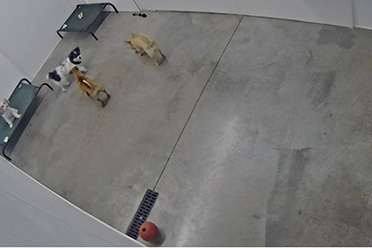
We keep our playrooms on live HD webcams so owners can verify supervision themselves rather than taking our word for it. , how quickly they respond to a dog that is being crowded, and whether rest periods are enforced.
Good facilities screen before they enroll, but the quality of that screening varies widely. Expect vaccination requirements, a health check, and a temperament assessment before any dog joins group play.
A useful temperament assessment is not a five-minute meet-and-greet. Ask what the evaluation actually measures: how the dog responds to a group entering the room, whether it can read and respond to other dogs' signals, how it handles being mounted or crowded, and whether it recovers quickly from a startle.
Grouping should be based on size, age, energy level, and play style, not just weight. At Paws Life, new dogs start with a free half-day temperament test, and you can review our new client requirements for vaccine and screening details before you visit.
A trial day is the real test, and most owners skip it. Book a half day, drop off in the morning, and watch how your dog behaves at pickup. A dog that trots out relaxed and tired had a good day. A dog that trembles, snaps, or refuses to walk in the door is telling you something.
Watch out: a facility that enrolls every dog after a brief lobby introduction, or that cannot describe its grouping criteria beyond "size," is likely placing dogs by convenience rather than fit.
| Stage | What to Do | What to Watch For |
|---|---|---|
| Before booking | Tour, ask the 7 questions, read the contract | Vague answers, no tour allowed |
| Trial day | Half-day visit, watch the webcam | Hiding, pacing, cowering |
| Pickup | Observe body language and energy | Relaxed and tired vs. trembling |
| Next 24 hours | Check for limping, diarrhea, lethargy | Any physical or behavioral change |
| Follow-up | Ask staff how the day went | Whether they would regroup your dog |
Bring a written list and expect direct answers. The best facilities welcome these questions, and evasive answers are your first signal.
That last one matters more than owners expect. Get the contract terms in writing before you commit. If you want to see the service itself first, you can review our daycare program and webcam access before booking.
Use this checklist during the tour and score each item honestly.
Previewing photos of the suites, playrooms, and yards before you arrive helps you know what to inspect in person.
Some issues are fixable; others are dealbreakers. Walk away if staff cannot tell you their ratio, if dogs are crowded into a single room regardless of size, or if a facility refuses to let you tour the play areas. Strong urine odor, dogs pacing or cowering in corners, and handlers who cannot describe basic body language are all warnings. So is vague answers about injury protocol or insurance.
If you want straight answers on vaccines, pricing, and drop-off policies to compare against what you hear elsewhere, our daycare and boarding FAQ covers the details we get asked most.
A trial day is the real test, and most owners skip it. Book a half day, drop off in the morning, and watch how your dog behaves at pickup. A dog that trots out relaxed and tired had a good day. A dog that trembles, snaps, or refuses to walk in the door is telling you something. Over the next 24 hours, check for limping, diarrhea, excessive scratching, or unusual lethargy. Follow up with staff: did your dog eat, drink, rest, and play? Ask whether they would place your dog in the same group again. Daycare is not right for every dog, and a good facility will tell you so rather than take your money.
| Stage | What to Do | What to Watch For |
|---|---|---|
| Before booking | Tour, ask the 7 questions, read the contract | Vague answers, no tour allowed |
| Trial day | Half-day visit, watch the webcam | Hiding, pacing, cowering |
| Pickup | Observe body language and energy | Relaxed and tired vs. trembling |
| Next 24 hours | Check for limping, diarrhea, lethargy | Any physical or behavioral change |
| Follow-up | Ask staff how the day went | Whether they would regroup your dog |
Watch for strong odors of urine or cleaner, dogs crammed into one space with no size or temperament grouping, and staff who can't tell you the dog-to-staff ratio. Other warnings: no visible vaccination requirements, no intake screening, and handlers who can't describe how they read body language or stress signals. A facility that won't let you tour the play areas, or that dodges questions about emergency procedures and veterinary care, is telling you something. Trust the tour more than the website.
Ask how dogs are screened before group play, how groups are split by size, age, and play style, and what the staff-to-dog ratio is at peak hours. Ask about staff training and tenure, vaccination and health requirements, rest periods during the day, and the exact protocol if a dog is injured or sick. Finally, ask about pricing, contract terms, and cancellation policy in writing. A well-run facility answers these without hesitation and puts the key terms in the enrollment agreement.
Look for secure double-gate entry, non-slip flooring, good ventilation and drainage, and clean water stations. Handlers should be on the floor with the dogs, not behind a desk, and they should be actively interrupting rude play before it escalates. Ask whether the facility has webcams or sends updates so you can see your dog during the day. A calm noise level and dogs with loose body language are better signs than a chaotic room full of barking.
No. The American Kennel Club's guidance on choosing a daycare stresses matching the facility to the individual dog. Highly social, playful dogs usually thrive in group play. Dogs who are anxious, reactive, elderly, or overwhelmed by noise may do better with quieter options, shorter visits, or in-home care. A trial day with a structured report afterward is the clearest way to find out. Ask the facility to be honest if your dog isn't enjoying it.
Check for exhaustion that lasts more than a day, soreness, small cuts or scrapes, and changes in appetite or drinking. Watch how your dog reacts the next time you pull into the parking lot: eagerness is a good sign, while trembling or refusal to approach the door tells you something went wrong. Ask for a written or verbal report covering play style, rest, eating, and bathroom habits. Follow up with specific questions rather than a vague 'how did it go.'
Finding a daycare that earns your trust takes more than good reviews. It takes a tour, the right questions, and a trial day that tells you how your dog actually feels there. Paws Life offers supervised playgroups, free HD webcams so you can check in anytime, a free half-day temperament test for new dogs, and over 25 years of playgroup experience behind every decision we make. Get started with Paws Life and give your dog a daycare day you can actually watch.
.jpg?maxwidth=369&maxheight=217&mode=crop&anchor=center)
28
Nov
Find dog boarding with webcams that fits your pet: see what live viewing should include, what to ask...
Read More
28
Nov
Looking for dog daycare? Learn what separates a safe, well-run facility from a risky one, plus the q...
Read More
28
Nov
Get dog socialization that fits each dog: assessed first, grouped by size and play style, and watche...
Read More© Paws Life All rights reserved | Mobile-ready websites by Web Station Inc.